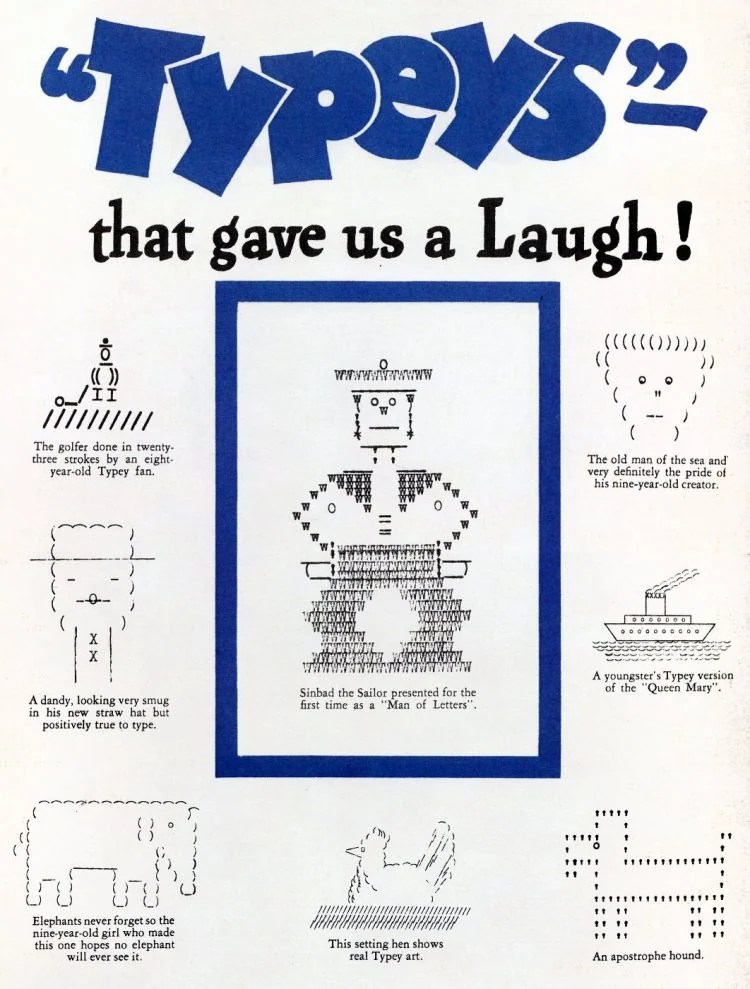
Every October, my mind wanders back to 1986 and the steady, low-frequency hum of a classroom packed with electric typewriters.
If you learned to type back then, you know it was not the era of the magic backspace key. If your finger slipped on an electric keyboard, the machine fired that metal typeball or hammer forward with absolute authority. There was no undo button. Your only salvation was backspacing, grabbing one of those little chalky plastic correction tabs, holding it between the ribbon and the paper, and striking the exact same mistaken letter again just to stamp a white ghost over your error.
Yet, even with all that friction, we still found a way to make art.
With enough patience, an extra sheet of paper, and a lot of planning, you could coax a Jack-o’-lantern out of that humming electric beast.
You could not just wing it. You had to count your spaces so the capital V eyes sat level. You had to space out your slashes for a jagged grin and frame the rounded cheeks with parentheses, zeroes, or asterisks. If you misjudged line fourteen, you had to decide right then and there whether to pull out that little white strip and try to save it, or simply make peace with a lopsided pumpkin.
Nobody made typewriter art because it was the most efficient way to get a seasonal decoration. We made it because there was joy in the process. We took a serious machine designed for business letters and office work and bent it toward something playful, creative, and human. The satisfaction came from the sheer friction of the work itself, watching a personality emerge one deliberate keystroke at a time.
Fast forward to our classrooms today, where the landscape could not look more different. A student can open a browser, whisper three words into a prompt box, and summon a four-thousand-pixel, photorealistic Jack-o’-lantern before the clock even moves one second.
We have traded the slow hum of the platen and the deliberate planning of each line for instant gratification.
Efficiency is wonderful, and modern generative tools give our students creative possibilities that previous generations could only dream of. But as teachers, we see the quiet trade-off every single day. When the output requires zero friction, the pride of the struggle vanishes with it. In a world of instant answers, instant summaries, and instant images, students can easily lose their tolerance for the messy middle where real thinking and grit take root.
Technology changes by the decade, but the fundamental nature of learning has not budged an inch. The magic never lived in the typewriter keys, and it certainly does not live in generative algorithms. The magic lives in the human patience, the deliberate thought, and the stubborn curiosity of the person sitting at the keyboard.
Our job is no longer teaching students how to produce something fast. The machines have that covered. Our real work now is reminding them why it is still worth slowing down, planning the design, and taking the time to build something with their own hands and minds.
Happy Friday, friends. May your coffee stay hot through third period (even if you left it sitting on the corner of your desk), and may you find a little time this weekend to embrace the slow, joyful work that no machine can do for you.


Leave a Reply