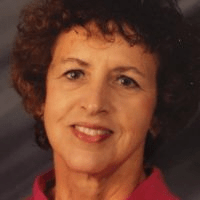
Early in my career, I had the privilege of co-teaching with a veteran educator named Marilyn Dysart. She was an English teacher who made the art of instruction look effortless because she possessed a gift no curriculum can provide: the ability to see the needs behind the eyes of her students.
One afternoon, while we were mid-lesson on The Diary of Anne Frank, I watched Marilyn quietly walk over to a student and motion for him to follow her into the hallway. A few minutes later, he returned to his desk, followed shortly by Marilyn.
After the period ended, I asked if everything was okay.
She told me simply that she knew he had no food at home. She had taken him to her locker, given him a bag of food she kept there, and had him put it in his backpack.
Marilyn did not need a script to tell her how to handle that moment. She did not need a data point to confirm what she saw. She had spent a lifetime building the intuition to recognize a human need and the heart to respond to it.
I find myself thinking about Marilyn a lot lately as we talk about the future of education and the role of artificial intelligence. There is so much pressure to standardize, to automate, and to create scripted pathways for both students and teachers. We are told that if we just have the right tiered plan or the right software, we can solve the challenges of the modern classroom.
But a script cannot see the hunger in a student’s eyes.
An algorithm cannot know when to pause a lesson on history to address a crisis in the present.
As we integrate new tools into our schools, we have to be careful not to devalue the invisible expertise that veteran teachers like Marilyn carry in their bones.
True expertise is not found in a document or a set of instructions. It is found in the thousands of hours spent in the trenches, learning the nuances of human behavior and the delicate balance of empathy and high expectations.
We can use technology to draft our emails or help us brainstorm lesson plans, but we must never let it replace the human intuition that allows us to stand in the gap for our students.
I am a better teacher today because I watched Marilyn Dysart lead with her heart first.
As the world moves faster toward automation, I am choosing to stay anchored in the wisdom she shared with me. We owe it to our students to ensure that no matter how much the tools change, the person at the front of the room is still someone who knows how to truly see them.
Who was the teacher who helped shape the educator you became?If conversations like this are happening in your school or district and you’d like someone to help facilitate thoughtful discussion around human-centered and ethical AI in education, I’d always be happy to connect here.
If you would like to read Marilyn’s blog or one of her books, that link is here.
 Paula Johnson Tech
Leave a comment