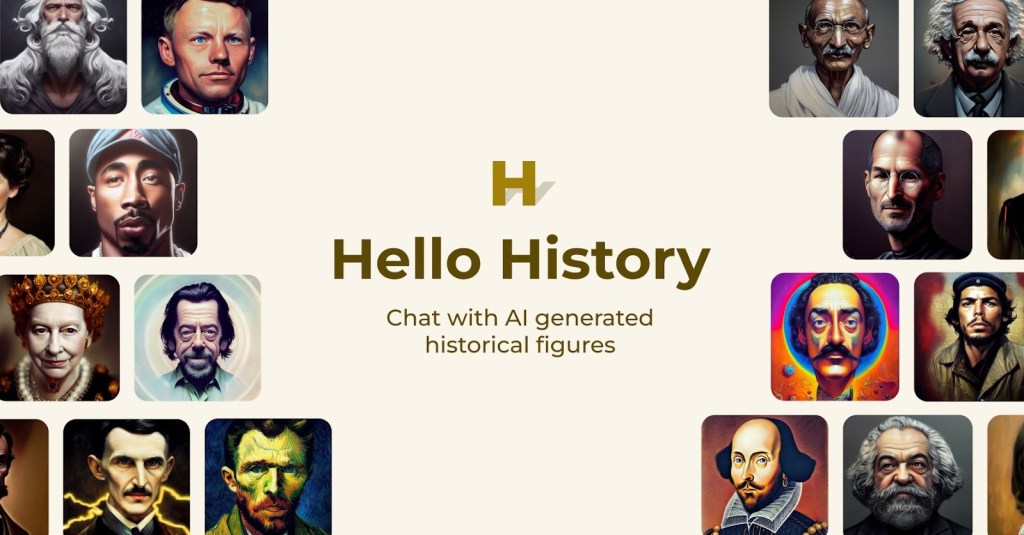
If you’ve ever wished you could consult Aristotle about your student’s latest logic-defying excuse, or ask Marie Curie how she managed all her lab notes without Google Drive, you’re in luck. This week’s spotlight tool lets you do just that. Hello History is an AI chat app that brings historical figures back for conversation. Yes, we are officially having conversations with the dead now. (I should have published this last week.)
All it takes is your device, a bit of curiosity, and a willingness to accept that the historical figure texting you back is really just advanced language modeling. But still, it’s fun.
What Is Hello History?
Hello History is an AI-powered chat tool that allows users to message with over 400 historical figures, from Cleopatra to Einstein to Susan B. Anthony. You type your question: “Hey, Abe Lincoln, did you really sleep in a log cabin?” The AI responds as that figure might have.
You can:
- Ask about major events from their life
- Explore historical context
- Engage in debates or philosophical discussions
- Pretend you’re having brunch with Frida Kahlo (To live your best life)
It’s basically a time machine without the TARDIS maintenance.
Why Teachers Should Care
Because…
- Students love anything that feels like texting
- It makes primary sources feel less dusty
- You can turn “Ugh, social studies is boring” into “I was literally just chatting with Gandhi.”
It’s especially powerful for:
✅ Social Studies
✅ Language Arts
✅ World History
✅ Debate and research skills
✅ “Creative Thursdays” when energy is low and holidays are near
The AI Behind the Tool (the nerdy but important bit)
Hello History uses generative AI language models trained on:
- Historical documents
- Biographies
- Letters and speeches
- Scholarly sources
- Public domain datasets
Its goal is to simulate how a historical figure might respond using both their life experiences and writing style.
NOTE: This is a best guess based on data, as Aristotle isn’t actually writing back from the Agora.
This is a great moment for:
- Digital literacy
- Source analysis
- “Trust but verify” skill building
Encourage students to check responses against reputable sources:
“What’s your evidence, Mr. Shakespeare… other than ‘all the world’s a stage’?”
Ethics, Bias, and the Past (AKA: History isn’t always cute)
Anytime AI represents real humans, especially those from complicated periods of history, we need to keep the conversation grounded in truth and respect.
✔ Good news:
The app attempts to filter out harmful ideologies and present contextualized responses.
✖ Challenges:
Historical figures were, products of their time. Some held oppressive or problematic beliefs, and we shouldn’t sanitize that. Plus, AI can misunderstand nuance or mistakenly reinforce stereotypes.
So in the classroom:
- Set expectations before use
- Discuss bias and historical impact
- Model respectful questioning
- Debrief responses that feel inaccurate or concerning
This transforms the tool into a critical thinking workout, not a historical gossip mill.
Classroom Ideas That Don’t Require You to Grade Anything Extra
⬡ “Interview a Leader” Research Project
Students choose a figure, have a chat, collect quotes, verify facts, and create a mini biography.
⬡ Debate Night: Historical Edition
Harriet Tubman vs. Julius Caesar on leadership?
⬡ Creative Writing Prompt
“A conversation with someone from the past…”
Bonus points if Abe Lincoln complains about TikTok.
⬡ Timeline or Event Clarification
Students can ask direct clarifying questions like:
“What were you thinking during the Cuban Missile Crisis?”
(Spoiler: probably panic.)
⬡ Empathy Lens Reflection
“How did this event feel for you personally?”
Great for SEL integration.
⬡ Cross-curricular Extension
Science students can chat with Nikola Tesla.
Art students can ask Monet why everything is so blurry.
Teacher Tips (because we like things smooth)
Use the free version for quick class tasks
Have students take screenshots of interesting responses
Pair conversations with secondary sources
Review question prompts beforehand
Frame inaccuracies as learning opportunities
Also, pro tip: If the students ask Napoleon about his height… expect sass.
Final Thoughts
Hello History turns textbooks into texting and in a world where students communicate mostly through tapping tiny rectangles, that’s a win. It’s engaging, it’s exploratory, and it sneaks in skills like sourcing, perspective-taking, and historical literacy.
Just remember:
AI isn’t a historian. The humans are!
But if it helps students become historians? Count me in.
So go forth, talk to the past, and maybe ask Amelia Earhart where she went. (Too soon?)Until next Tuesday, may your tech be friendly and your students be curious.
And remember: if Aristotle leaves you unread… he’s probably just busy philosophizing.
 Paula Johnson Tech
Leave a comment